
AC Tune-Up Checklist for GTA Homeowners
An AC tune-up before summer catches small problems before they become no-cooling emergencies in July.
5 min read | Updated 2026-05-06
Written and reviewed by the GTA HVAC Pros service team.
What you can check yourself in 15 minutes
Walk outside and look at the condenser. Clear away leaves, grass clippings, and debris within two feet of the unit. Bent fins are normal over time, but heavy matting restricts airflow and forces the compressor to work harder.
Inside, swap the furnace filter if it has been more than 90 days. A clogged filter restricts airflow across the evaporator coil, which can freeze it and shut down cooling entirely. Check that all supply and return registers are open and unblocked by furniture.
What a professional tune-up covers
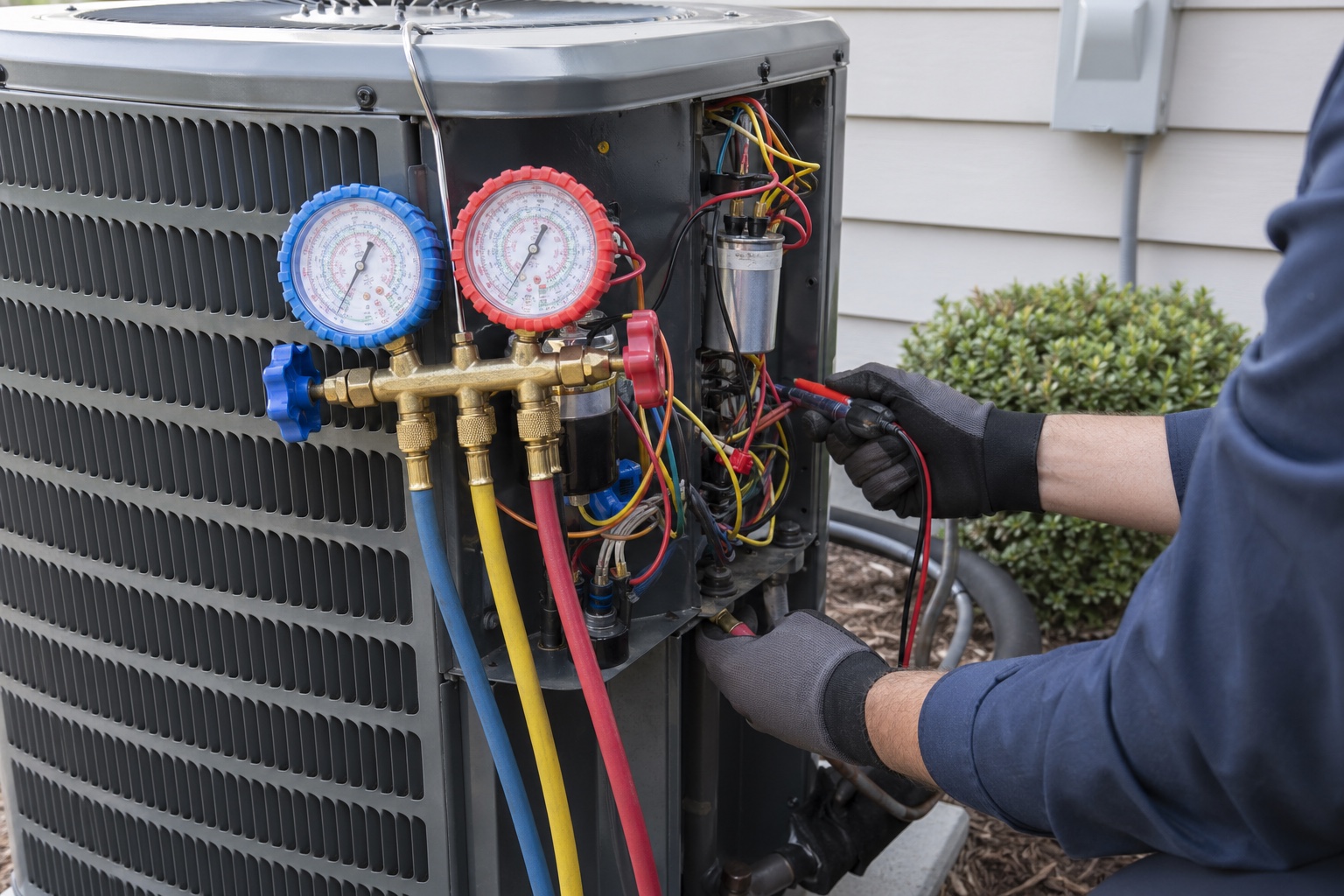
A proper AC tune-up includes refrigerant pressure checks, electrical connection tightness, condenser and evaporator coil condition, drain line flow, thermostat calibration, and amp draws on the compressor and fan motors.
The technician should also check the contactor for pitting, test the capacitor, and confirm the system cycles off cleanly. A unit that short-cycles or runs continuously often has an issue a tune-up can catch early.
Warning signs that mean more than a tune-up
Warm air from the vents with the thermostat set correctly usually points to a refrigerant issue, compressor fault, or blocked coil — not just a dirty filter.
Ice on the refrigerant lines, a condenser that vibrates loudly at startup, or a system that trips the breaker repeatedly all need diagnostic attention beyond a routine tune-up. Call before the first heat wave, not during it.
Best time to schedule in the GTA
April and May are ideal. HVAC companies have open schedules, parts are available, and you avoid the June-July rush when every AC failure becomes an emergency call.
If you missed that window, schedule it anyway. A mid-season tune-up still catches problems before they escalate into compressor damage or refrigerant leaks.