
HVAC Emergency: What to Do Before the Technician Arrives
When heating or cooling fails, the first 15 minutes matter. Here is what to check yourself and what to have ready when you call.
4 min read | Updated 2026-05-04
Written and reviewed by the GTA HVAC Pros service team.
If you smell gas or suspect carbon monoxide
Leave the house immediately. Do not flip switches, use your phone inside, or try to locate the source. Call Enbridge Gas at their emergency line or 911 from outside.
HVAC companies do not handle gas leaks or carbon monoxide events directly. That is a utility and emergency services issue first. Once the home is cleared safe, a furnace technician can inspect and repair the heating system.
No heat: quick checks before calling
Confirm the thermostat is set to "heat" and the temperature is set above the current room reading. Check that the furnace switch (usually a light switch on or near the furnace) is in the ON position. Look at the furnace filter — a completely plugged filter can trigger a safety lockout.
If the furnace displays an error code (flashing LED pattern), write it down or take a photo. That code tells the technician what failed before they arrive, which can speed up diagnosis and parts preparation.
No cooling: quick checks before calling
Confirm the thermostat is set to "cool" and the fan is set to "auto." Check the breaker panel for a tripped breaker serving the outdoor unit — condensers are on their own circuit.
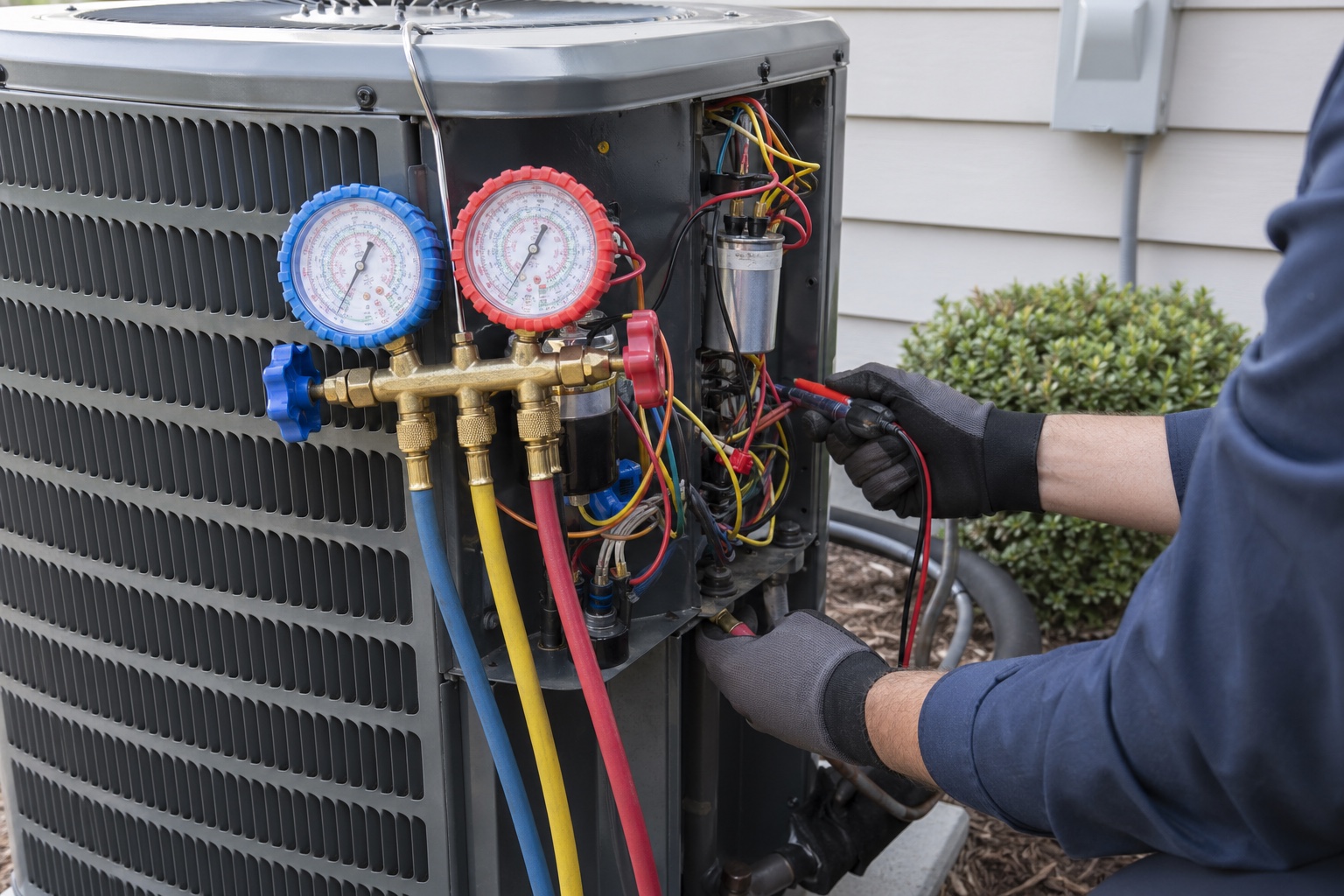
Look at the outdoor unit. If it is not running at all, the contactor or capacitor may have failed. If it is running but the air inside is warm, the issue is likely refrigerant, coil, or airflow related. Do not try to open panels or test components yourself.
What to tell the HVAC company when you call
Have these details ready: equipment brand and approximate age, what symptoms you noticed, when the problem started, any error codes or unusual sounds, and your address including any access notes.
Mentioning whether anyone vulnerable is home — infants, elderly family members, or pets — helps the dispatcher prioritize. Be honest about urgency. A no-heat call at -15°C with a baby in the house is a different priority than a comfort complaint.