If you smell rotten eggs or hear gas escaping, leave immediately. From a safe distance call 911 or Enbridge Gas at 1-866-763-5427; do not operate switches or use a phone near the suspected leak. If a carbon monoxide alarm sounds, leave the home and call 911 from outside. Do not wait for an HVAC appointment in either situation.
If there is no gas smell or CO alarm, check that the thermostat is set to heat above room temperature, that the furnace power switch is on, and that the breaker has not tripped. Look at the filter and replace it if it is visibly dirty and you know the correct size. Note any display code without removing safety panels. Avoid repeated resets or trying to work on gas or electrical components yourself.
A silent furnace may have a thermostat, power, door-switch, control, or safety-lockout issue. We trace the call for heat and the start-up sequence to find where it stops. A blinking fault light can help; record the code before cycling power, since a reset can erase useful evidence.
The fan can run even when the burners do not stay lit. Ignition, flame sensing, venting, condensate drainage, or controls may be involved. We check the operating sequence and the reason heat is not being delivered before recommending a part.
A furnace that starts and stops often can be reacting to restricted airflow, a control problem, or a safety limit. We check the filter, return and supply airflow, blower operation, and relevant controls. Repeatedly resetting a tripped system is not a substitute for finding the cause.
Rattling, squealing, or grinding can point to different mechanical problems. Water around a high-efficiency furnace may involve condensate drainage, but the source needs inspection. A brief dusty smell after first use is different from a persistent burning smell; shut the system down and request guidance if the smell persists or you see smoke.
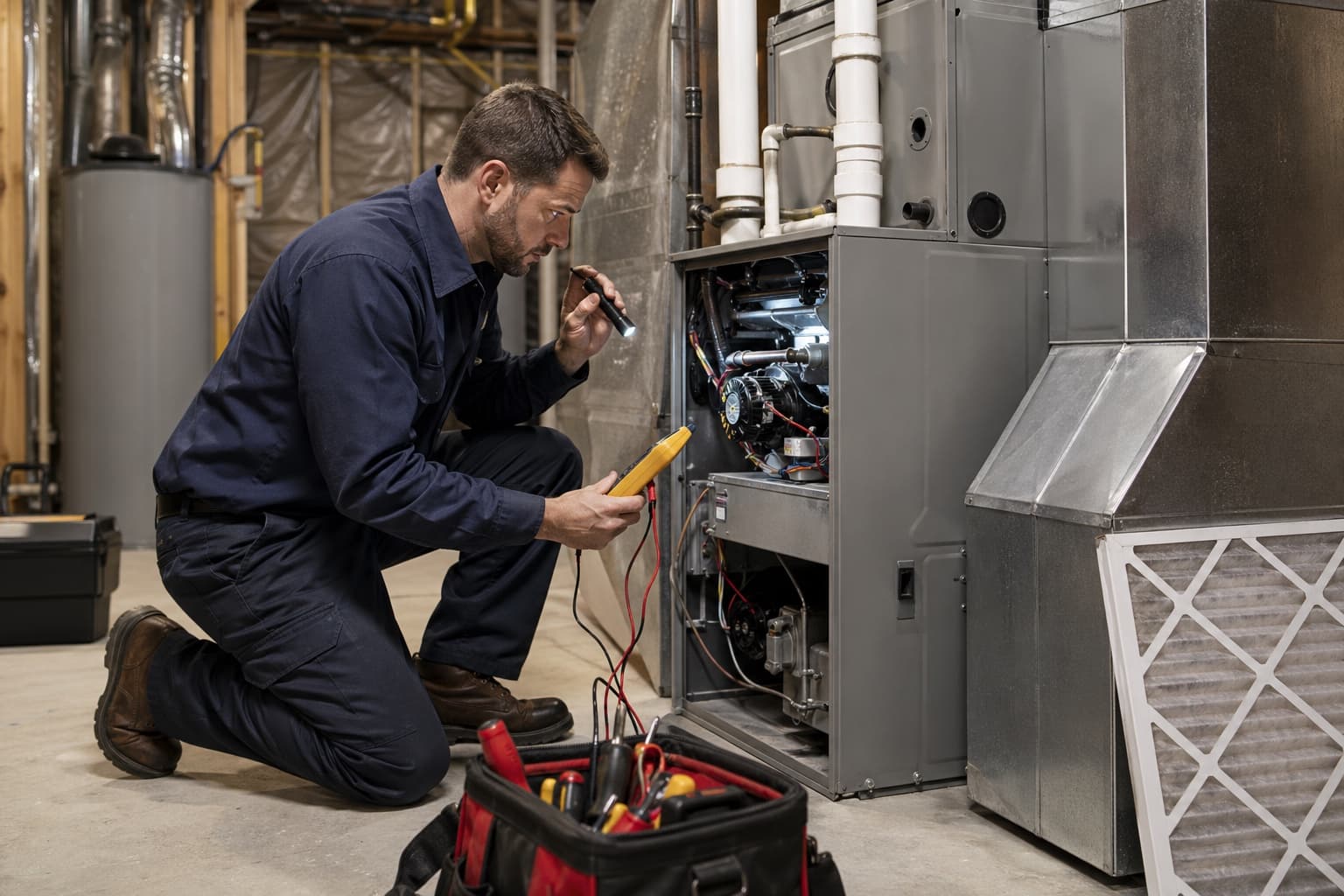
We ask about the symptom and when it began, inspect accessible equipment and controls, identify the fault and any safety concern, then explain the proposed work before proceeding. When a part or additional work is needed, the scope and timing depend on the specific furnace and what the inspection finds.
A repair may be sensible when the fault is isolated and the rest of the system is in sound condition. If the repair is extensive, the equipment has recurring faults, or a safety issue changes the scope, ask for the findings in writing and compare repair with a properly planned replacement. We do not treat every no-heat call as a reason to replace the furnace.