HVAC Maintenance Schedule for Ontario Homes
Staying ahead of furnace and AC problems starts with a simple seasonal schedule that most Ontario homeowners can follow.
7 min read | Updated 2026-04-28
Written and reviewed by the GTA HVAC Pros service team.
Spring: prepare your cooling system (March to May)
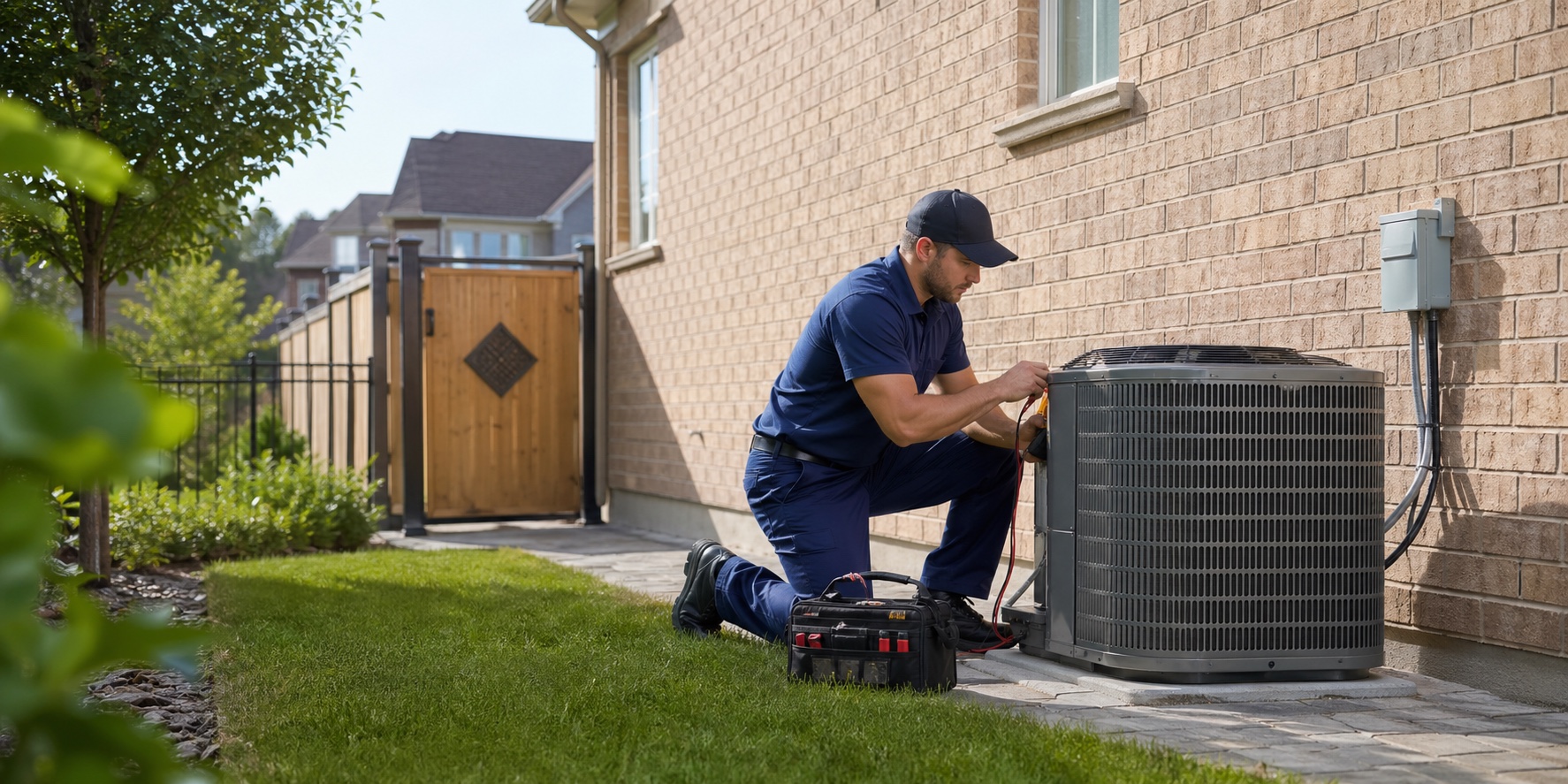
Replace the furnace filter. Walk outside and clear debris around the condenser. Turn the thermostat to cooling mode and confirm the outdoor unit starts within a few minutes. Listen for grinding, clicking, or buzzing — any of those warrant a service call before summer.
This is also the best window to schedule a professional AC tune-up. Technicians have availability, parts are stocked, and problems found now are cheaper than emergency repairs in July.
Summer: monitor performance (June to August)
Check the filter monthly during heavy use. A family of four with pets may need monthly filter swaps, not the 90-day schedule on the packaging.
Watch for uneven cooling, the system running nonstop without reaching set temperature, or ice forming on refrigerant lines. These are early signs of refrigerant, airflow, or coil issues that are better caught mid-season than after a compressor failure.
Fall: heating season prep (September to November)
Before the first cold night, switch the thermostat to heating mode and let the furnace run for 15 minutes. A brief burning smell is normal as dust burns off the heat exchanger — a persistent smell or no heat means a service call.
Schedule a furnace tune-up in September or October. The technician checks ignition, burner flames, gas pressure, venting, electrical connections, and the heat exchanger. Carbon monoxide testing should be part of every fall furnace service.
Winter: stay ahead of failure (December to February)
Keep the area around the furnace clear — no boxes, paint cans, or stored items within three feet. Check the filter every 30 days when the furnace runs daily.
If the furnace short-cycles, makes new noises, or the house has cold spots that did not exist last winter, call for service before the issue worsens. Mid-winter furnace replacements are stressful and sometimes require temporary heating arrangements.