
Why Your AC Is Not Cooling: Common Causes in Toronto Summers
When the AC runs but the house stays warm, the cause is usually one of a handful of issues. Here is how to narrow it down before you call.
6 min read | Updated 2026-05-29
Published by GTA HVAC Pros.
Start with the easy, safe checks
Before assuming the worst, confirm the thermostat is set to cool and the target temperature is below the room temperature. A thermostat bumped to heat or set on a stale schedule is a surprisingly common cause of a warm house in a Toronto heat wave.
Next, check the air filter. A clogged filter chokes airflow, which makes the system run constantly while delivering little cool air and can eventually freeze the indoor coil. Replacing a dirty filter is the single most common DIY fix.
Finally, check the breaker panel and the outdoor disconnect. If the outdoor condenser is silent while the indoor blower runs, a tripped breaker or a failed capacitor may be stopping the compressor.
A frozen coil means airflow or refrigerant trouble
If you see ice on the copper lines or the indoor coil, shut the system off and let it thaw. Running a frozen AC can damage the compressor, which is the most expensive part to replace.
Freezing usually points to restricted airflow (dirty filter, blocked return, failing blower) or low refrigerant from a leak. Low refrigerant is not something to top up and forget; the leak needs to be found and repaired.
Refrigerant leaks and compressor issues need a technician
An AC that cools weakly, runs nonstop, or blows warm air after years of service often has a refrigerant or compressor problem. Handling refrigerant requires certification in Ontario, so these are not DIY repairs.
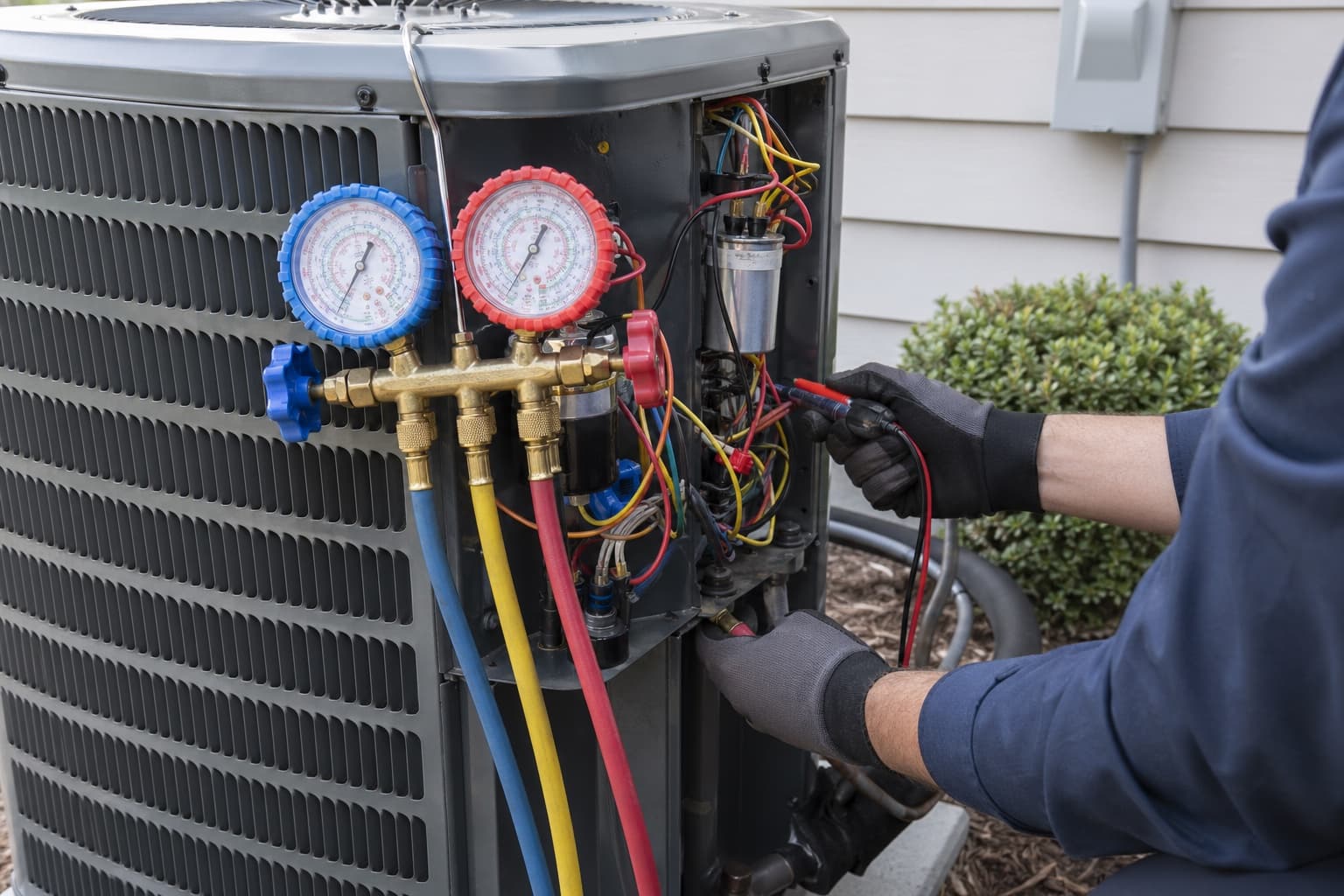
A proper diagnostic measures superheat and subcooling, checks electrical components, and inspects the coils so the recommendation is based on data, not a guess.
When it is worth repairing vs replacing
A newer AC with a minor part failure is almost always worth repairing. An older unit using R-22 refrigerant, with a failing compressor or repeated breakdowns, is often a better candidate for replacement.
If your system is 12 to 15 years old and the repair is significant, ask for both a repair quote and a replacement quote so you can compare the real numbers for your home.
Get the right help fast during a heat wave
Cooling failures cluster on the hottest days, which is exactly when appointments are tight. Having your equipment details, symptoms, and the system age ready makes the call faster and the diagnosis sharper.
For homes with seniors, infants, or medical needs, a no-cooling situation in extreme heat should be treated as urgent.