
How Often Should You Replace Your Furnace Filter?
Filter fit, compatibility, and the maintenance schedule depend on the equipment and filter instructions, system use, and visible condition.
5 min read | Updated 2026-10-07
Published by GTA HVAC Pros.
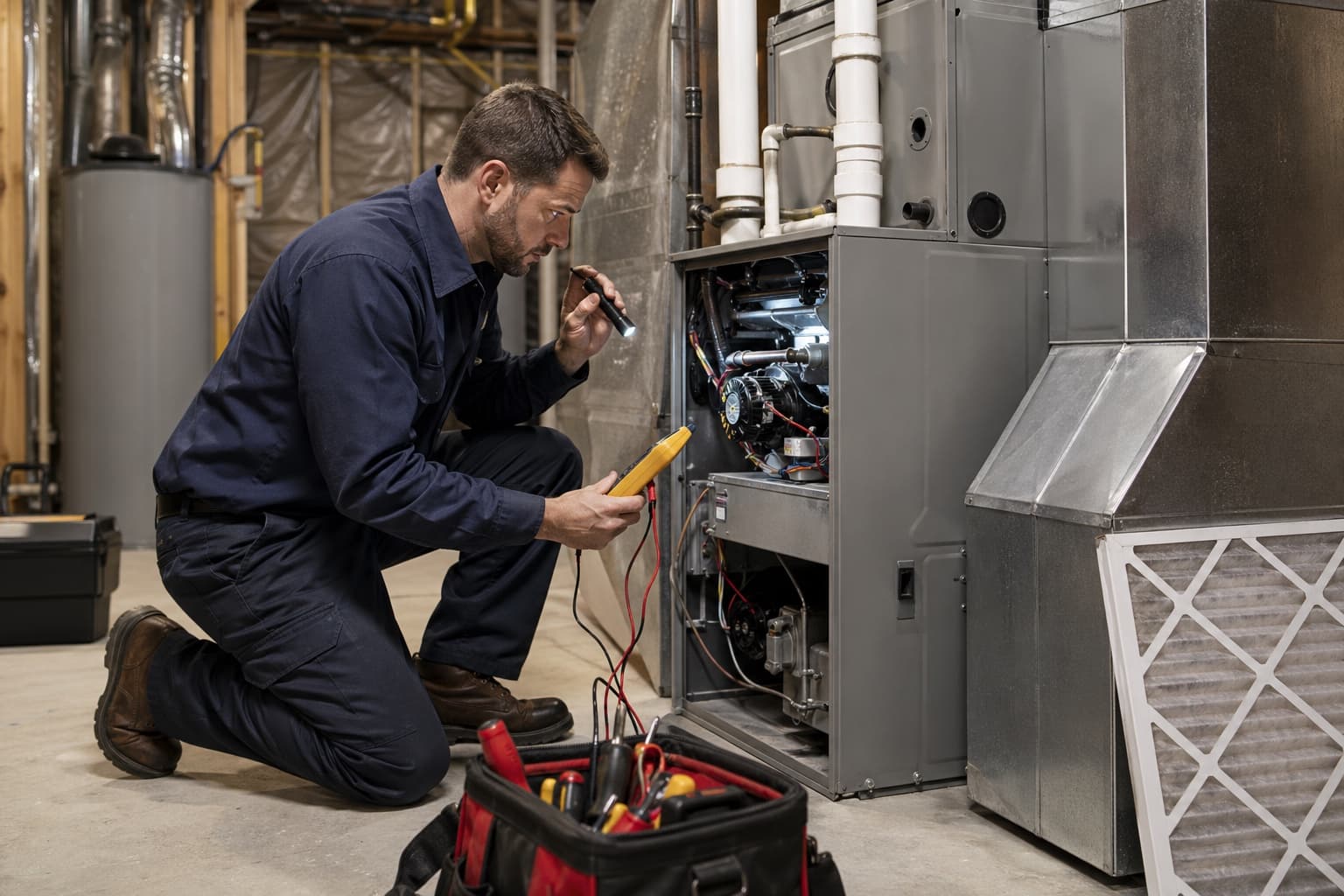
Start with the equipment and filter instructions
Follow the inspection and replacement interval specified by the equipment and filter manufacturer. Filter thickness alone does not establish a safe service interval; loading depends on use and conditions.
Where a furnace and central AC share the same air handler and filter, account for heating, cooling, and fan operation when planning checks. Other system arrangements may use different filters or cleaning instructions.
What changes the schedule
Pets, renovations, dust, and operating hours can change filter loading. Inspect condition as directed by the manufacturer and ask the service provider whether the schedule should change for your home.
A light-through-filter check does not establish compatibility or replace the manufacturer’s condition and service guidance. Follow safe shutdown and access instructions; do not open electrical or sealed equipment compartments.
Why a dirty filter costs you more
A clogged filter restricts airflow, which forces the blower to work harder, raises energy bills, and reduces comfort. In summer it can freeze the AC coil; in winter it can cause a furnace to overheat and shut down on a limit switch.
Dirty filters and restricted airflow can contribute to heating and cooling problems. Regular checks can reveal a restriction, but a clean filter does not guarantee that equipment will not fail.
Get the size and MERV rating right
Confirm the required filter dimensions, type, fit, and airflow direction from the equipment and filter instructions. A printed nominal size alone may not establish that a replacement fits the cabinet correctly.
Use the filtration rating and pressure-drop limits approved for the system. Do not assume a universal MERV range suits every furnace or choose a higher rating without checking blower airflow and filter compatibility with the manufacturer or qualified service provider.
Sources and methodology
See the linked sources for supporting guidance. It is general planning information, not a substitute for an on-site diagnosis, manufacturer instructions, emergency response, or a written quote.
- Natural Resources Canada — Operating heating and cooling systems
Filter maintenance and unobstructed airflow; follow the equipment and filter instructions.