
Why Is Water Leaking From My Air Conditioner?
An air conditioner is supposed to remove moisture, but that water should reach the drain—not the furnace room floor or a finished ceiling. Shut down an active indoor leak, protect the area, then trace whether the problem is drainage, ice, airflow, or another nearby source.
10 min read | Updated 2026-08-15
Written and reviewed by the GTA HVAC Pros service team.
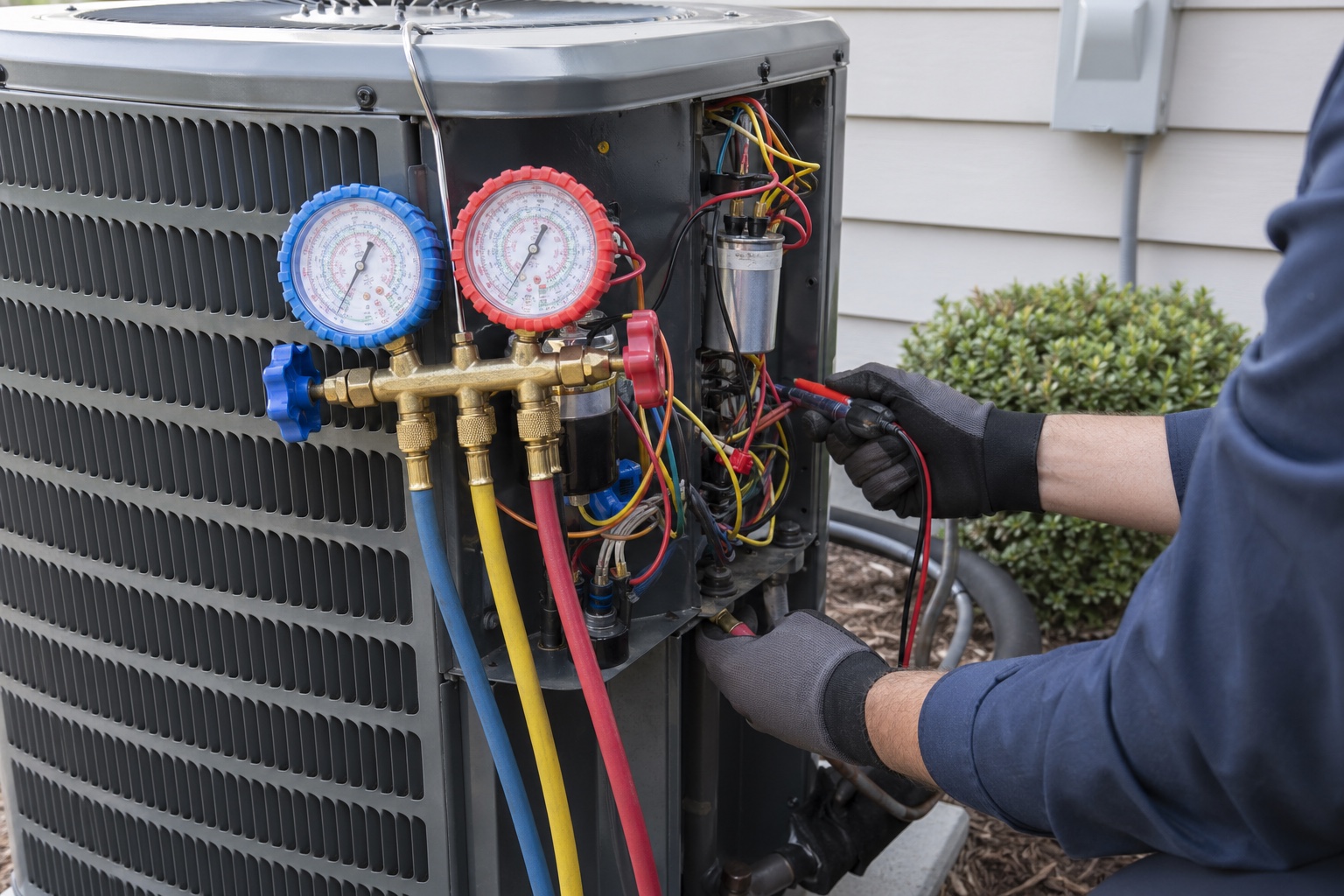
First confirm which part is wet
Central air conditioning removes moisture at the indoor evaporator coil, which is often mounted above or beside the furnace. That water should collect in a pan and leave through a condensate drain or pump. A puddle on the furnace-room floor, water at the air handler, a wet filter cabinet, or a ceiling stain below attic equipment is not normal drainage.
Water around the outdoor condenser can be a different condition, especially during humid weather or after rain. Start with location: indoor or outdoor, active drip or old stain, clear water or another fluid, cooling on or off, and whether ice is visible on the insulated refrigerant line. Do not call every liquid near an AC unit a refrigerant leak.
Shut down an active indoor leak before it spreads
Set cooling to off when water is overflowing indoors, reaching electrical equipment, soaking drywall or flooring, or dripping through a ceiling. Do not open energized panels, reach into the furnace or air handler, or stand in water to operate electrical equipment. Use the thermostat or an accessible normal control only when it is safe to do so.
Move belongings away, catch a small drip without blocking equipment access, and photograph the wet area and equipment condition. If water is near the electrical panel, light fixtures, outlets, or a sagging ceiling, keep clear and arrange the appropriate emergency help. The AC repair and the water-damage response may need to happen in parallel.
A blocked condensate drain is a common starting point
Dust, biological buildup, debris, a displaced tube, or a poorly draining trap can slow or stop condensate flow. Water then backs up in the pan, trips a float switch, leaks at a joint, or overflows onto the equipment and floor. Intermittent cooling with a full pan can be a drainage safety doing its job.
Look only at the accessible exterior drain route and visible tubing. A homeowner may be able to clear an obvious, manufacturer-approved service point, but do not pour harsh chemicals into an unknown line or disconnect piping without knowing where it drains and how its trap or vent is designed. A blockage can be inside the cabinet or downstream of the visible pipe.
Condensate pumps and float switches can stop the sequence
Some Toronto basements cannot drain the coil by gravity and use a small condensate pump. The pump reservoir, power supply, discharge tube, check valve, and safety switch all become part of the cooling system. A kinked discharge or failed pump can leave the pan full even when the coil and drain inlet are clean.
Do not bypass a float switch to make the AC run. It may be preventing a larger overflow. Note whether the pump runs, whether its reservoir is full, and where the discharge line goes, then leave electrical testing and replacement to a qualified technician.
A frozen evaporator coil can create a delayed flood
Ice can build on the indoor coil or refrigerant line when airflow is restricted or the refrigeration system has a fault. While the coil is frozen, cooling drops. After the system stops, the melting ice can produce water faster than the pan and drain can handle or send water outside the intended collection area.
Carrier Canada advises shutting the system down and contacting a qualified technician when the evaporator coil is frozen. Do not chip ice, heat the coil, or keep restarting cooling. Record where ice is visible and allow the system to remain off; the leak can continue for a while as hidden ice melts.
Check the filter without treating it as the whole diagnosis
A heavily loaded filter can reduce airflow across the coil and contribute to icing. With the system off and following the equipment instructions, check whether the filter is dirty, installed in the correct airflow direction, and the approved size and type. Also confirm return grilles and supply registers are not blocked by furniture or closed throughout the house.
Replace a dirty filter, but do not run the system without one or substitute a restrictive filter just because it fits the slot. If icing or leaking returns, the cause may involve the blower, indoor coil, ductwork, refrigerant charge, metering device, or controls. A clean filter does not rule those out.
The pan, fittings, and equipment position matter
A primary drain pan can corrode, crack, shift, or leak at a connection. Drain piping can lose slope or separate after equipment service. An air handler or coil cabinet that is not positioned as designed may send water away from the drain opening instead of toward it.
Attic and above-finished-space systems may also have a secondary pan or drain intended to reveal or contain a problem. Water from that route is a warning, not a normal second drain. Pan replacement, internal access, and levelling should follow the equipment design rather than a surface patch over the leak.
Rule out the systems beside the air conditioner
Furnace rooms often contain a humidifier, water heater, plumbing line, floor drain, laundry equipment, condensate from another appliance, and foundation moisture. Water can run along ductwork or piping and appear below the AC even when the cooling drain is working.
Dry the accessible floor, then watch where the first new drop appears without touching energized components. Note whether the leak happens only during cooling, after the system stops, during rain, or when another appliance operates. That timing prevents an HVAC visit from chasing a plumbing or building-envelope leak.
Water damage needs its own boundary check
A small mechanical repair can sit above a larger wet area. Condensate can travel under flooring, into baseboards, through ceiling cavities, and along the furnace platform before it becomes visible. Mark the edge of the visible stain, photograph changes, and check nearby rooms and the level below.
Do not close a ceiling or reinstall stored contents merely because the dripping stopped. If porous finishes or insulation are wet, the affected area needs a drying decision based on access, duration, material, and measured condition. Fixing the drain and drying the building are related but separate tasks.
A useful service call tests the whole moisture path
Give the technician the leak location, when it starts and stops, thermostat setting, filter condition, visible ice, pump behaviour, recent service, and any water damage. Leave photographs available if the area has dried or the ice has melted before arrival.
Diagnosis may include the coil and cabinet, primary and secondary pans, drain trap and slope, condensate pump and safety, filter and airflow, blower operation, coil cleanliness, refrigerant performance, duct conditions, and equipment installation. The final check should run cooling long enough to prove that condensate reaches its intended drain without another overflow.
Sources and methodology
This guide was reviewed against the linked official material. It is general planning information, not a substitute for an on-site diagnosis, manufacturer instructions, emergency response, or a written quote.
- Carrier Canada — Air conditioner repair guide
Canadian manufacturer guidance on filters, condensate drains, and when persistent AC problems need qualified service.
- Carrier Canada — Troubleshooting an AC not working
Manufacturer guidance on frozen evaporator coils, restricted airflow, visible ice, condensate, and safe troubleshooting limits.
- Trane — Air handler dripping water
Manufacturer explanation of condensate pans, drains, coil icing, and water leaks around indoor equipment.
Related Toronto HVAC guides
Why an Air Conditioner Coil Freezes—and What to Check First
Ice is a symptom, not the repair. The useful question is whether the coil became too cold because air stopped moving, refrigerant performance changed, or the system kept running when it should not.
Why Your AC Is Not Cooling: Common Causes in Toronto Summers
When the AC runs but the house stays warm, the cause is usually one of a handful of issues. Here is how to narrow it down before you call.
How to Prepare Your AC for Summer in the GTA
A few steps in late spring keep your AC reliable through the hottest weeks and help you avoid a breakdown when you need cooling most.