
Why an Air Conditioner Coil Freezes—and What to Check First
Ice is a symptom, not the repair. The useful question is whether the coil became too cold because air stopped moving, refrigerant performance changed, or the system kept running when it should not.
8 min read | Updated 2026-08-03
Written and reviewed by the GTA HVAC Pros service team.
Turn cooling off before chasing the cause
If ice is visible on the refrigerant line or indoor coil, switch the thermostat from cooling to off. Running the compressor while airflow is blocked can deepen the freeze and may damage equipment. The fan may help thaw the coil if the system is otherwise safe and the drain can handle the meltwater.
Do not chip ice from the coil or use sharp tools. Protect the area around the furnace or air handler from water and arrange service if the coil is inaccessible, the drain is overflowing, or electrical components are wet.
Restricted airflow is a common starting point
A loaded filter, blocked return grille, closed supply registers, dirty coil, blower problem, collapsed duct, or incorrect fan setting can reduce the warm indoor air crossing the coil. The refrigerant continues absorbing heat until the coil surface drops below freezing and moisture turns to ice.
Check only homeowner-safe items such as filter condition and obvious blocked grilles. Do not open electrical or refrigerant compartments.
Low refrigerant is not routine consumption
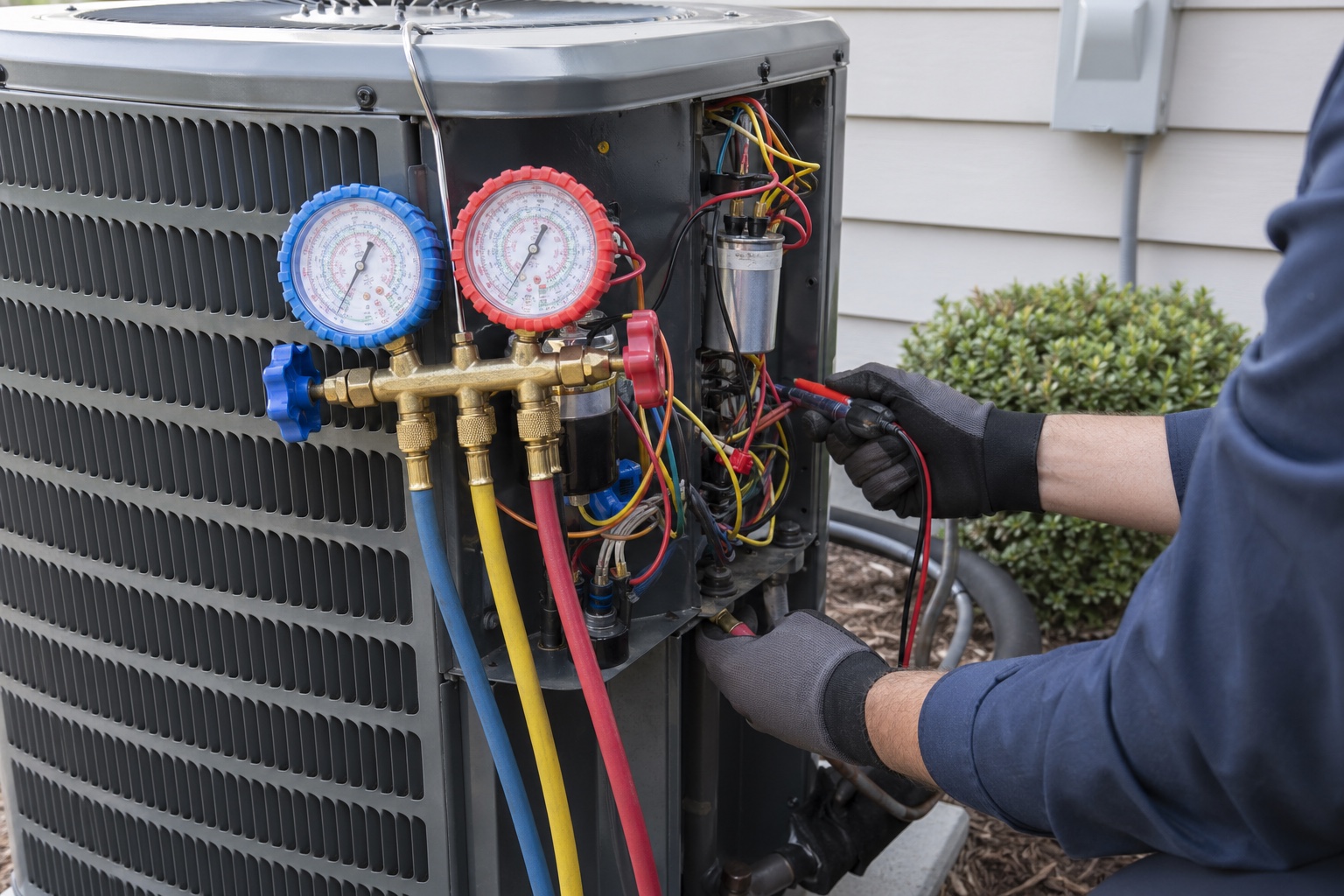
An air conditioner does not normally use up refrigerant like fuel. Low charge can result from a leak, previous service error, or another system issue. Pressure and temperature measurements require qualified tools and must be interpreted with airflow and operating conditions.
Adding refrigerant without finding the reason for low charge can lead to repeat freezing, wasted cost, and environmental release. Ask what was diagnosed, whether a leak was found, and what repair is proposed before authorizing a top-up.
Weather and thermostat settings can contribute
Running central cooling during cool outdoor weather or holding an unusually low indoor set point can put some systems outside their intended operating range. A thermostat or sensor fault can also keep equipment running after conditions should have changed.
If the system froze after a normal warm day at a normal set point, assume there is an airflow, control, refrigerant, or equipment issue until it is checked.
Restart only after the ice has cleared
A frozen coil can take hours to thaw. Restarting early hides the original condition under new ice. Once fully thawed and dry enough to operate safely, a brief test can confirm whether airflow and cooling return, but repeated freezing needs professional diagnosis.
Tell the technician how long the system ran, filter condition, thermostat setting, rooms with weak airflow, water around the equipment, and whether ice began indoors or at the outdoor line. Those details shorten the path to the real fault.
Sources and methodology
This guide was reviewed against the linked official material. It is general planning information, not a substitute for an on-site diagnosis, manufacturer instructions, emergency response, or a written quote.
- Natural Resources Canada — Air conditioning your home
Canadian guidance on cooling-system operation, airflow, maintenance, and qualified service.
Related Toronto HVAC guides
Why Your AC Is Not Cooling: Common Causes in Toronto Summers
When the AC runs but the house stays warm, the cause is usually one of a handful of issues. Here is how to narrow it down before you call.
AC Tune-Up Checklist for GTA Homeowners
An AC tune-up before summer catches small problems before they become no-cooling emergencies in July.
How Much Does AC Repair Cost in Toronto in 2026?
Most Toronto AC repair bills depend on one failed component, the diagnostic time, and whether refrigerant work is involved. Use these 2026 planning ranges before approving a repair.