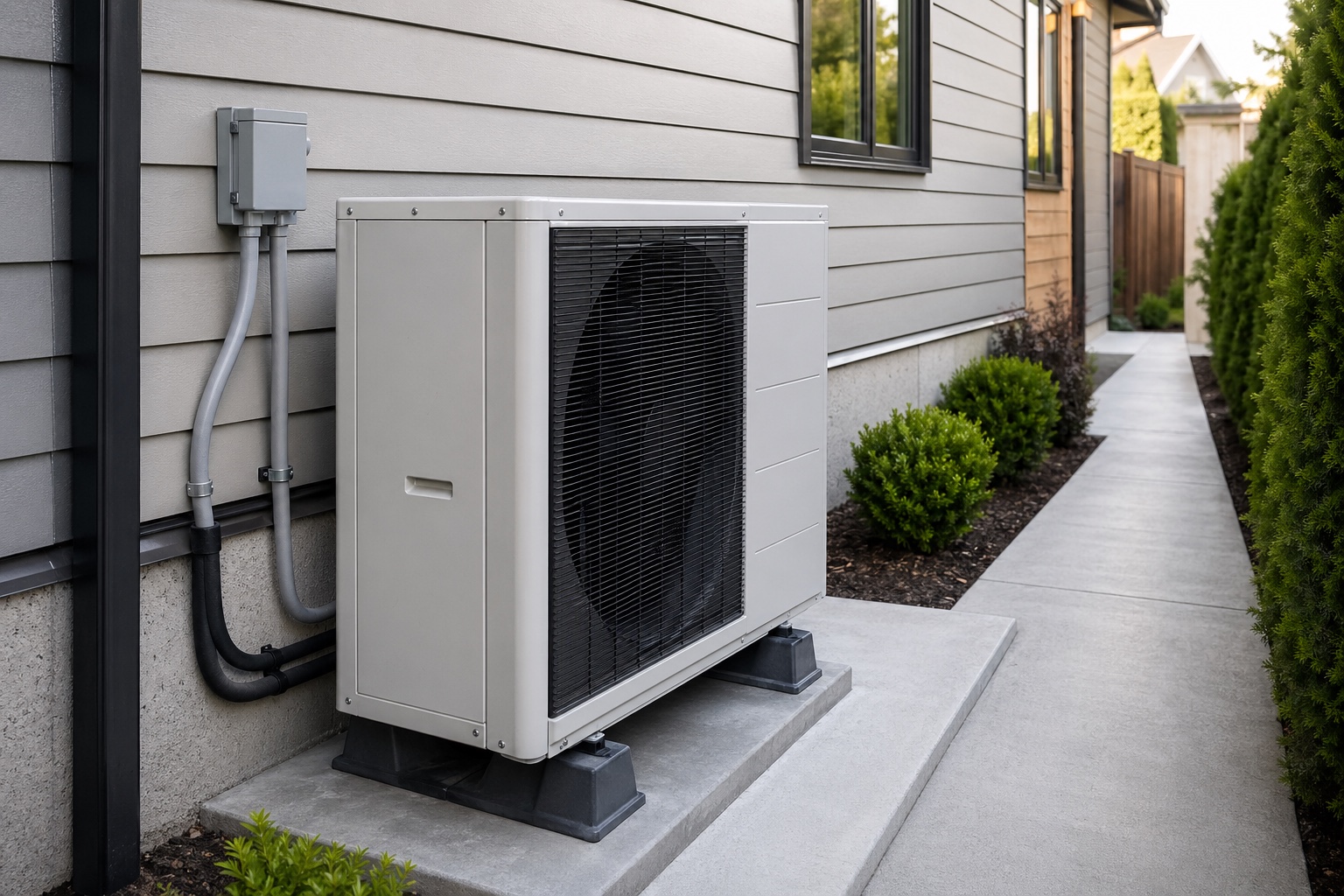
A central ducted air-source heat pump, ductless mini-split, hybrid furnace-and-heat-pump system, and condo water-source unit do not share the same controls, heat source, access, or backup strategy. Send the indoor and outdoor model labels, thermostat or controller photo, error code, and a short description of what changed. We also ask whether the issue affects heating, cooling, or both; whether it began after a power interruption, thermostat change, building switchover, or extreme weather; and whether another system supplies backup heat.
During cold, damp weather, an air-source heat pump can collect frost on the outdoor coil and temporarily reverse operation to melt it. Natural Resources Canada explains that the outdoor fan normally stops during defrost and supplementary heat may operate while the coil clears. A brief cycle, water below the unit, and some steam can be normal. Ice that keeps growing, blocks the coil, returns immediately, or remains after repeated cycles needs assessment for airflow, drainage, sensors, controls, refrigerant, or another equipment fault.
Start by confirming heat mode, a deliberate setpoint, and whether the thermostat reports auxiliary heat, a fault, or an equipment delay. A dirty filter, blocked return, closed register, indoor blower problem, outdoor-unit obstruction, sensor issue, defrost fault, or refrigerant-system problem can reduce delivered heat. In a hybrid system, furnace lockout settings, outdoor-temperature changeover, thermostat configuration, and the furnace itself also matter. The diagnostic should test the sequence instead of assuming the outdoor unit is the only possible cause.
A heat pump cools through the same basic refrigeration cycle as an air conditioner, so weak airflow, dirty coils, a failed fan, electrical or control faults, low heat transfer, or a refrigerant issue can all produce warm air or long runtimes. Water near the indoor equipment may come from a blocked condensate route, frozen coil thawing, a pump or pan problem, or another nearby appliance. We trace the source and operating condition before clearing a drain or replacing a part.
You can note the thermostat mode and setpoint, check whether the display and breakers are on, look for a visibly dirty accessible filter, confirm that indoor registers are open, and check from the ground that snow, leaves, or debris are not blocking outdoor airflow. Record the error code and when the problem occurs. Do not open electrical panels, bypass safeties, chip ice from the coil, move refrigerant lines, or repeatedly reset a breaker. A burning smell, sparking, damaged wiring, or a gas smell from hybrid equipment requires immediate shutdown and the appropriate emergency response.
An in-suite water-source heat pump depends on the building loop, scheduled mode, valves, water flow, controls, power, and access rules in addition to the equipment inside the unit. Ask property management whether neighbours are affected, whether the central plant is operating normally, and whether an approved contractor, access booking, insurance document, or water shutdown is required. The condominium declaration and building rules determine responsibility; an in-suite symptom does not by itself prove that the failed component belongs to the owner.
Equipment age alone does not decide the outcome. The failure type, condition of the indoor and outdoor sections, repair history, parts and refrigerant availability, warranty status, electrical and duct compatibility, backup-heat strategy, and remaining system match all affect the choice. A control, sensor, drain, motor, wiring, or isolated component fault may support repair. Repeated major failures, incompatible sections, unavailable parts, extensive coil or compressor work, or a system that no longer fits the home can justify a replacement quote.
A useful repair note identifies the system, reported symptom, active fault codes, operating mode, relevant temperatures or pressures where measured, airflow and filter condition, visible coil and drain findings, control response, repair performed, and follow-up limitations. Natural Resources Canada recommends regular contractor maintenance and clear filters and registers for reliable operation. Save the model and serial numbers, warranty information, service notes, and controller settings so a recurring fault can be compared rather than diagnosed from scratch.