Ask each quote to identify the furnace model, input and output capacity, AFUE, heating stages, blower and thermostat compatibility, and any connected cooling or heat-pump equipment. Compare removal, duct transitions, venting, condensate, gas and electrical work, startup checks, and warranty terms as separate scope items. Model-specific manufacturer instructions and the home assessment determine the final installation; a brand name or efficiency percentage alone cannot establish the right choice.
A furnace that needs one routine repair is a different decision from equipment with repeated shutdowns, a major safety-related failure, unavailable parts, or a history of uneven heating. We start with the existing diagnosis, furnace age and condition, repair history, comfort complaints, and any planned renovation or insulation work. The goal is to compare a defined repair with a defined replacement—not to use age alone as a sales argument. If the current problem can be repaired sensibly, that option should remain clear.
Replacing a furnace with the same input rating does not prove the old size was correct. Insulation, windows, air leakage, exposure, ceiling height, layout, additions, and the way rooms are used all change heat loss. Natural Resources Canada recommends asking the contractor to calculate the home’s heat requirements so the furnace can be sized properly. That matters because capacity, staging, and airflow must work together; a larger furnace is not automatically a better comfort choice.
The furnace blower moves air through the supply ducts, returns, filter, cooling coil, registers, and grilles already in the house. We review visible duct dimensions and condition, return-air paths, filter setup, noise or weak-flow complaints, and rooms that have been consistently cold. A new furnace cannot correct every duct-design problem by itself. If the existing system creates excessive resistance or poor distribution, the quote should separate practical duct changes from the equipment replacement.
A high-efficiency furnace may require different vent routing, termination clearances, condensate drainage, and mechanical-room planning from the equipment being removed. The gas supply, shutoff, electrical disconnect, service space, and thermostat wiring also need review before work begins. Ontario’s Technical Standards and Safety Authority states that only TSSA-registered contractors and certified fuel technicians are legally permitted to install, service, or maintain fuel-burning appliances. The written scope should identify who is responsible for regulated fuel work and any other required trade or permit coordination.
AFUE describes seasonal fuel efficiency; Natural Resources Canada notes that it does not include the electricity used by controls, fans, or pumps. Single-stage, multi-stage, and modulating furnaces can also behave differently, while blower selection and controls affect circulation, noise, filtration, and compatibility with cooling equipment. We discuss the home’s priorities and compare model information without treating one headline number as the entire system. Brand, feature, or warranty terms should be confirmed in the written equipment selection rather than assumed from a generic package.
The furnace cabinet and blower often share the air handler role with a central air conditioner or heat pump coil. Before replacement, the plan should check physical fit, airflow needs, drain arrangement, thermostat stages, control wiring, and the remaining condition of connected equipment. Keeping an existing AC may be reasonable when it is compatible and serviceable; replacing both systems may make sense when the equipment is poorly matched or near the same replacement point. A hybrid heat-pump option deserves its own load, control, electrical, and operating-cost discussion.
The proposal should identify the exact furnace or selection basis, capacity, efficiency information, included controls, removal and disposal, sheet-metal transitions, venting and condensate work, gas and electrical responsibilities, thermostat work, access assumptions, and what could change if concealed conditions are found. Ontario’s consumer guidance recommends a written contract and explains protections around estimates and agreed changes. Rebates, financing, manufacturer coverage, and registration deadlines can change, so each should be verified from the current program or manufacturer terms before signing.
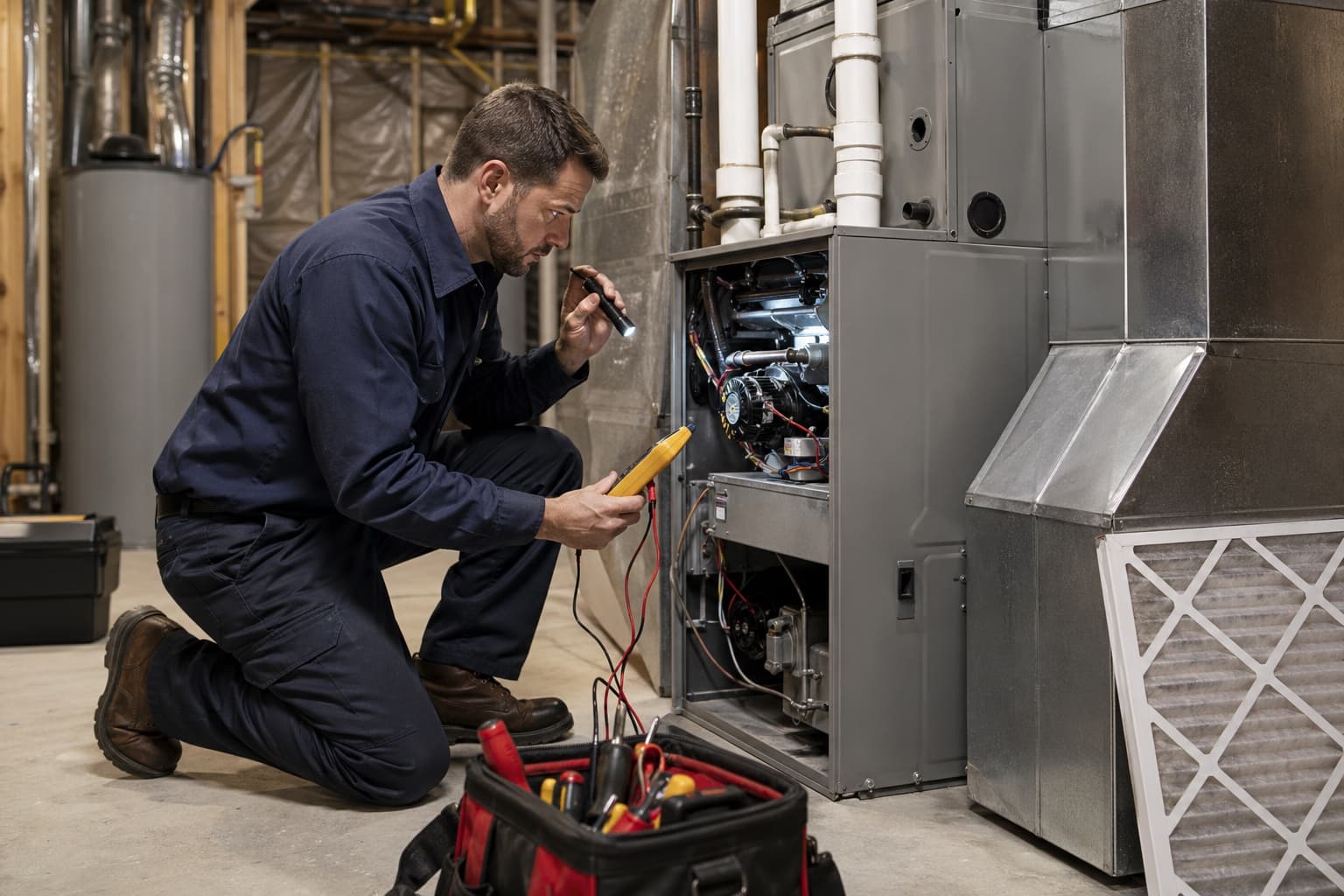
Installation is not complete when the cabinet is connected. Startup should follow the selected equipment’s instructions and include applicable checks of ignition, safety controls, venting, condensate, thermostat calls, blower settings, temperature rise, and operation with connected cooling or humidification equipment. The homeowner should know the filter size and direction, normal operating sounds, thermostat basics, shutoff locations, maintenance expectations, and which documents need to be retained. Any limitation that prevented a check should be recorded rather than hidden behind a generic completion note.