A Burning Smell From the Furnace: What to Do First
A brief dusty smell at seasonal startup is different from melting plastic, smoke, a gas odour, or a carbon-monoxide alarm. Treat the warning sign before trying to name the failed part.
7 min read | Updated 2026-08-03
Written and reviewed by the GTA HVAC Pros service team.
If you smell gas, leave
A rotten-egg or sulphur-like gas odour is not a routine furnace smell. Do not operate switches, appliances, phones, or anything that could create a spark inside. Leave the building and call the gas utility or 911 from outside.
Do not return to troubleshoot the furnace. HVAC repair begins only after the emergency responder or utility has made the site safe.
If a carbon-monoxide alarm sounds, leave
Carbon monoxide has no smell, taste, or colour, so an odour cannot confirm whether it is present. Health Canada advises occupants to leave immediately, move to fresh air, call 911 or the fire department from outside, and return only after the problem has been fixed by a professional.
A smoke alarm does not replace a CO alarm. Follow the alarm manufacturer’s testing and replacement instructions and current Ontario placement requirements.
Dust at first startup should fade
Dust can settle on warm surfaces during the off-season and create a dry, dusty odour during the first heating cycle. It should be mild and temporary. Check that the filter is correctly installed and that stored items, paper, paint, and cleaning products are not touching or crowding the furnace.
If the smell remains, grows stronger, returns on later cycles, or comes with smoke, unusual noise, a tripped breaker, or poor operation, shut the system off and arrange qualified service.
Electrical and melting smells need a shutdown
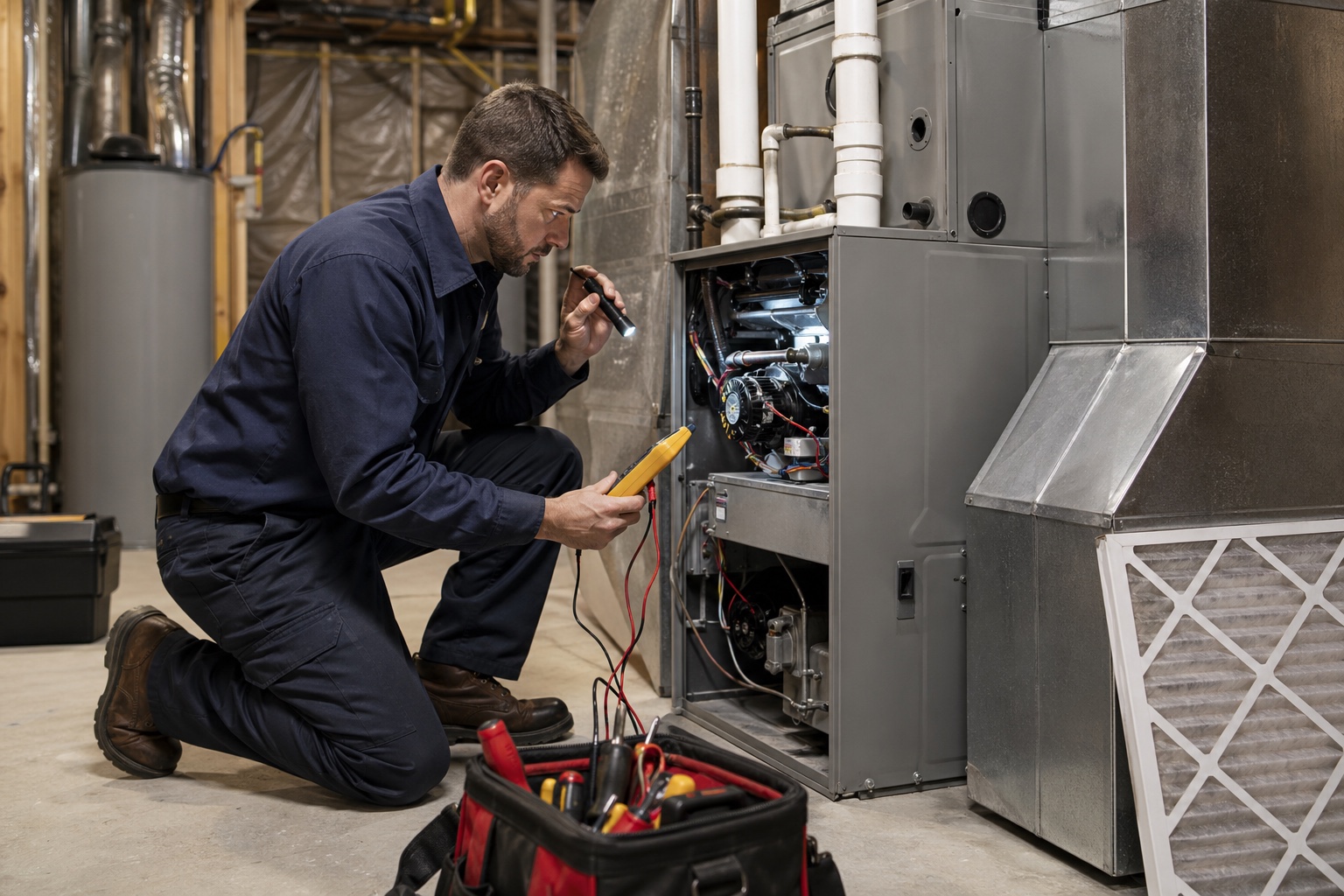
Hot wiring, a failing motor, overheated components, or debris can create a sharp electrical or melting-plastic smell. Turn the furnace off using the thermostat and service switch if you can do so safely. Do not remove panels or keep restarting it to see whether the smell returns.
If there is visible smoke, fire, sparking, or heat damage, leave and call emergency services. Otherwise, keep the equipment off until it has been inspected.
Describe the event, not your diagnosis
When booking service, explain when the smell started, whether the furnace had just started for the season, how long it lasted, where it was strongest, whether the blower and heat continued, and whether any alarm or breaker activated.
That information is more useful than guessing at a part. The technician can then check the equipment, controls, motor, electrical connections, ignition, burners, venting, airflow, and nearby materials in a safe order.
Sources and methodology
This guide was reviewed against the linked official material. It is general planning information, not a substitute for an on-site diagnosis, manufacturer instructions, emergency response, or a written quote.
- Health Canada — Carbon monoxide: preventing exposure
Emergency response, vent clearance, appliance maintenance, and certified CO alarm guidance.
- TSSA — Be in the know when it comes to carbon monoxide
Ontario advice on annual inspection by a registered fuels contractor and working certified CO alarms.
- TSSA — Consumer safety and registered fuels contractors
Ontario fuels-safety responsibilities and contractor lookup guidance.
Related Toronto HVAC guides
HVAC Emergency: What to Do Before the Technician Arrives
When heating or cooling fails, the first 15 minutes matter. Here is what to check yourself and what to have ready when you call.
HVAC Maintenance Schedule for Ontario Homes
Staying ahead of furnace and AC problems starts with a simple seasonal schedule that most Ontario homeowners can follow.