Why a Furnace Turns On and Off Too Often: A Toronto Short-Cycling Guide
Short cycling is a symptom, not a diagnosis. The useful clues are which part starts, how long it runs, what shuts off first, and whether the thermostat is ever satisfied.
10 min read | Updated 2026-08-11
Written and reviewed by the GTA HVAC Pros service team.
What short cycling actually means
A normal heating cycle starts, runs long enough to add useful heat, and stops when the thermostat is satisfied or the furnace completes its control sequence. Short cycling describes repeated starts and stops before the home reaches the set temperature or before the equipment establishes a stable run.
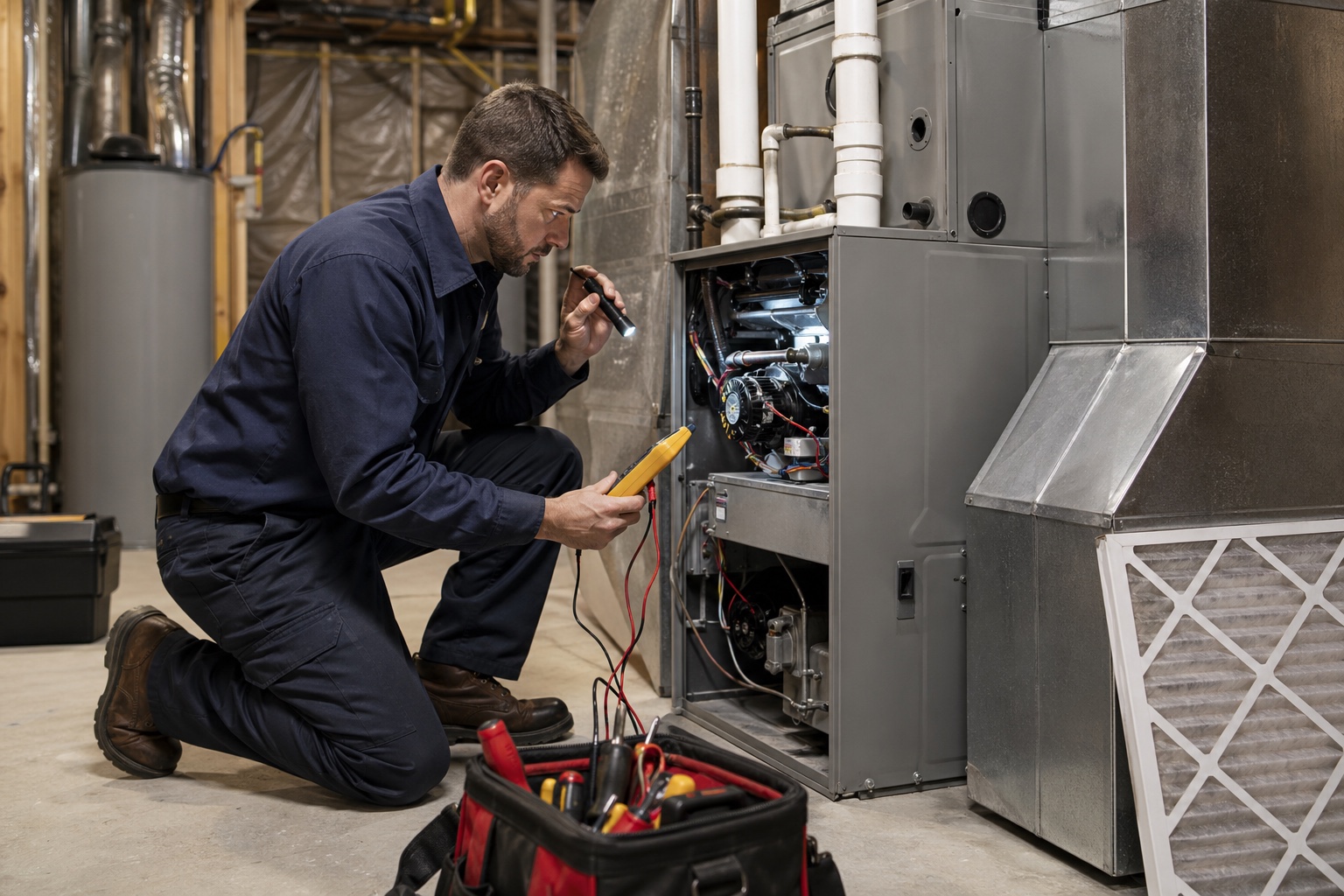
Do not diagnose it from the sound of the blower alone. A modern furnace may stage its burner, delay the indoor fan, or continue the blower after the flame stops. Note the thermostat call, ignition, flame, blower, shutdown, error light, and time between restarts. That sequence tells a technician much more than “it runs every few minutes.”
Start with homeowner-safe filter and vent checks
Natural Resources Canada advises keeping return grilles and warm-air vents clean and unobstructed and maintaining filters according to the equipment instructions. A loaded or overly restrictive filter can reduce airflow. Closed or blocked registers and returns can add to the same problem.
With the furnace off as directed by the manufacturer, check whether the filter is dirty, installed in the correct airflow direction, and the approved size and type. Reopen registers that were accidentally closed and move furniture away from returns. Do not remove access panels, bypass safety switches, or run the furnace without its required filter to see whether cycling changes.
Restricted airflow can trigger an overheating shutdown
A furnace needs enough air moving across the heat exchanger. When airflow is restricted by the filter, blower, coil, ductwork, or blocked grilles, internal temperature can rise and a limit control may stop the burners for protection. The blower may continue, then the burners restart after the furnace cools—creating a repeating pattern.
Changing a dirty filter may solve one restriction, but repeated limit trips need diagnosis. A dirty indoor coil, blower problem, undersized return, duct restriction, incorrect speed setting, or other condition can remain. Continuously resetting the furnace does not correct overheating and can obscure the fault history.
The thermostat may be ending the call too early
A thermostat near a supply register, kitchen heat, direct sun, fireplace, draft, or another unrepresentative location can warm faster than the occupied space and stop the call. Loose wiring, low batteries, incorrect equipment configuration, or a control fault can also produce erratic starts.
Confirm the thermostat is in heating mode, the schedule is intentional, and the display remains powered. Compare its reading with how the nearby area actually feels, but do not move wires or change installer settings blindly. Heat pumps, multi-stage furnaces, humidifiers, and communicating controls need compatible configuration.
A flame that starts and quickly disappears points elsewhere
If the inducer starts, ignition occurs, and the burners shut off within seconds while the thermostat still calls for heat, the control may not be proving flame or another safety condition. Flame sensing, ignition, gas supply, pressure switches, condensate, venting, and controls require qualified diagnosis.
Do not clean burners, adjust gas pressure, bypass a pressure or limit switch, or repeatedly power-cycle a gas furnace. Record the error code without removing panels if it is visible through the viewing port, then leave the code available for the technician.
Venting and condensate can interrupt high-efficiency furnaces
Snow, ice, leaves, nests, or other obstruction at the approved exterior intake or exhaust can affect furnace operation. High-efficiency equipment also produces condensate that must drain through its designed trap, tubing, pump, and disposal route. A blocked or frozen part of that path can stop a heating cycle.
From outside and without opening equipment, look for obvious snow or debris around the termination while following the manufacturer’s clearance instructions. Do not push tools into the vent or pour products into condensate piping. Vent configuration, pressure, drainage, and combustion safety belong to a qualified technician.
Oversizing can create short, uncomfortable cycles from day one
A furnace with more output than the home and duct system need may raise the thermostat area quickly, stop, and restart before heat is distributed evenly. Natural Resources Canada notes that staged and modulating furnaces can provide lower, steadier output that improves comfort and avoids short cycling when the system is selected and configured appropriately.
Sizing cannot be confirmed from floor area alone. Heat loss, insulation, windows, air leakage, design temperature, duct capacity, equipment output, staging, and thermostat controls all matter. If repeated cycling began with a replacement furnace, ask for the load calculation and commissioning settings rather than assuming a larger unit is better.
Know when to shut the furnace off
Turn the system off and arrange prompt service for repeated overheating or limit codes, burning or electrical smells, smoke, sparking, water reaching electrical components, loud delayed ignition, or a cycle that will not stabilize after a correct filter and clear-grille check.
For a gas odour, leave the building and call the gas utility or 911 from outside. If a carbon-monoxide alarm sounds, leave immediately, move to fresh air, call emergency services, and return only after professionals declare the property safe. An HVAC appointment is not the first response to an active gas or CO emergency.
Give the technician a useful cycle record
Write down the thermostat setting and room temperature, outdoor weather, filter condition, which registers are open, cycle length, which component stops first, any code, recent maintenance, and when the problem began. Note whether it happens from a cold start, only in very cold weather, or after several normal cycles.
The service visit can then test the heating sequence, airflow and temperature rise, filter and blower, thermostat and wiring, safeties, ignition and flame proving, venting, condensate, duct conditions, and equipment configuration. The repair should address the cause of the shutdown—not simply make the code disappear.
Sources and methodology
This guide was reviewed against the linked official material. It is general planning information, not a substitute for an on-site diagnosis, manufacturer instructions, emergency response, or a written quote.
- Natural Resources Canada — Operating and maintaining heating and cooling systems
Canadian guidance on filters, airflow, thermostats, duct balance, furnace staging, and maintenance.
- Natural Resources Canada — Guide to maintaining your heating and cooling system
Homeowner filter checks and contractor maintenance items including thermostat, electrical, and blower components.
- Carrier Canada — Furnace troubleshooting
Manufacturer guidance on filters, airflow, thermostat location, sizing, and repeated cycling.
Related Toronto HVAC guides
A Burning Smell From the Furnace: What to Do First
A brief dusty smell at seasonal startup is different from melting plastic, smoke, a gas odour, or a carbon-monoxide alarm. Treat the warning sign before trying to name the failed part.
How Often Should You Replace Your Furnace Filter?
The right filter schedule protects airflow, comfort, and your equipment. Here is a simple rule of thumb for GTA homes.
What Size Furnace Does Your Toronto Home Need?
An oversized furnace short-cycles and wastes energy. An undersized one runs constantly and never heats the house evenly. Here is how sizing actually works.