
Ontario Carbon Monoxide Alarm Rules for Homes in 2026
Since January 1, 2026, affected Ontario homes need a carbon-monoxide alarm adjacent to each sleeping area and on every storey—not only beside the furnace.
9 min read | Updated 2026-08-07
Written and reviewed by the GTA HVAC Pros service team.
What changed on January 1, 2026
Ontario updated the Fire Code requirements for carbon-monoxide alarms in existing homes. TSSA explains that affected detached houses, semi-detached houses, townhouses, and cottages now need alarms adjacent to each sleeping area and on every storey, including floors without bedrooms.
That closes the gap created by treating one hallway alarm as coverage for an entire multi-level home. The alarm near bedrooms is meant to wake sleeping occupants, while the storey-by-storey requirement improves warning elsewhere in the building.
Which homes are affected
TSSA lists four conditions that bring an existing home into the updated requirement: a fuel-burning appliance, a fireplace, an attached garage, or heating air supplied by a fuel-burning appliance located outside the home, such as equipment in a utility shed.
Fuel-burning equipment includes common furnaces, boilers, water heaters, stoves, and other appliances using natural gas, propane, oil, wood, or similar fuels. An attached garage matters because vehicle exhaust can introduce carbon monoxide even when the home’s main heating system is electric.
Where the alarms go in a typical house
For a two-storey house with basement bedrooms only on the upper floor, the updated pattern generally means an alarm adjacent to the sleeping area plus an alarm on the main floor and in the basement. If sleeping areas are separated, each sleeping area needs adjacent coverage.
“Adjacent” and the exact mounting location still need to follow the Fire Code, alarm instructions, and the layout. Place and mount alarms according to the manufacturer’s tested directions; do not guess based on whether carbon monoxide is thought to rise or sink. Avoid locations the instructions prohibit, such as where drafts, humidity, cooking, or obstruction can interfere.
Use alarms certified for Canada
The Ontario Fire Code references recognized carbon-monoxide alarm standards, and Health Canada advises buyers to look for a Canadian certification mark on the alarm and packaging. A product listing, app description, or online marketplace title is not a substitute for the mark on the device.
Combination smoke and carbon-monoxide alarms can satisfy more than one purpose only when the product is properly certified, installed in the required location, and maintained for both functions. Check the model instructions before assuming one device covers every placement rule.
Test, power, and replacement dates matter
Follow the manufacturer’s schedule for testing, battery replacement, cleaning, end-of-life signals, and full device replacement. Write the installation or replacement date where it can be found, and do not remove a battery or disable an alarm because of a nuisance signal.
A digital display can help show low readings on models designed for that purpose, but it does not replace the audible alarm or professional investigation. If an alarm repeatedly activates, treat the event as a safety issue rather than assuming the device is oversensitive.
What to do when a CO alarm sounds
Health Canada says to leave the home immediately and move to fresh air. Do not search for the source. Once outside, call 911, the fire department, or emergency services, and return only after the problem has been fixed by a professional and the site has been declared safe.
Carbon monoxide has no smell, taste, or colour. Headache, dizziness, weakness, nausea, confusion, chest pain, and other symptoms can overlap with illness; do not wait for symptoms to prove the alarm is real. People and pets leave first.
Alarms do not replace furnace and vent maintenance
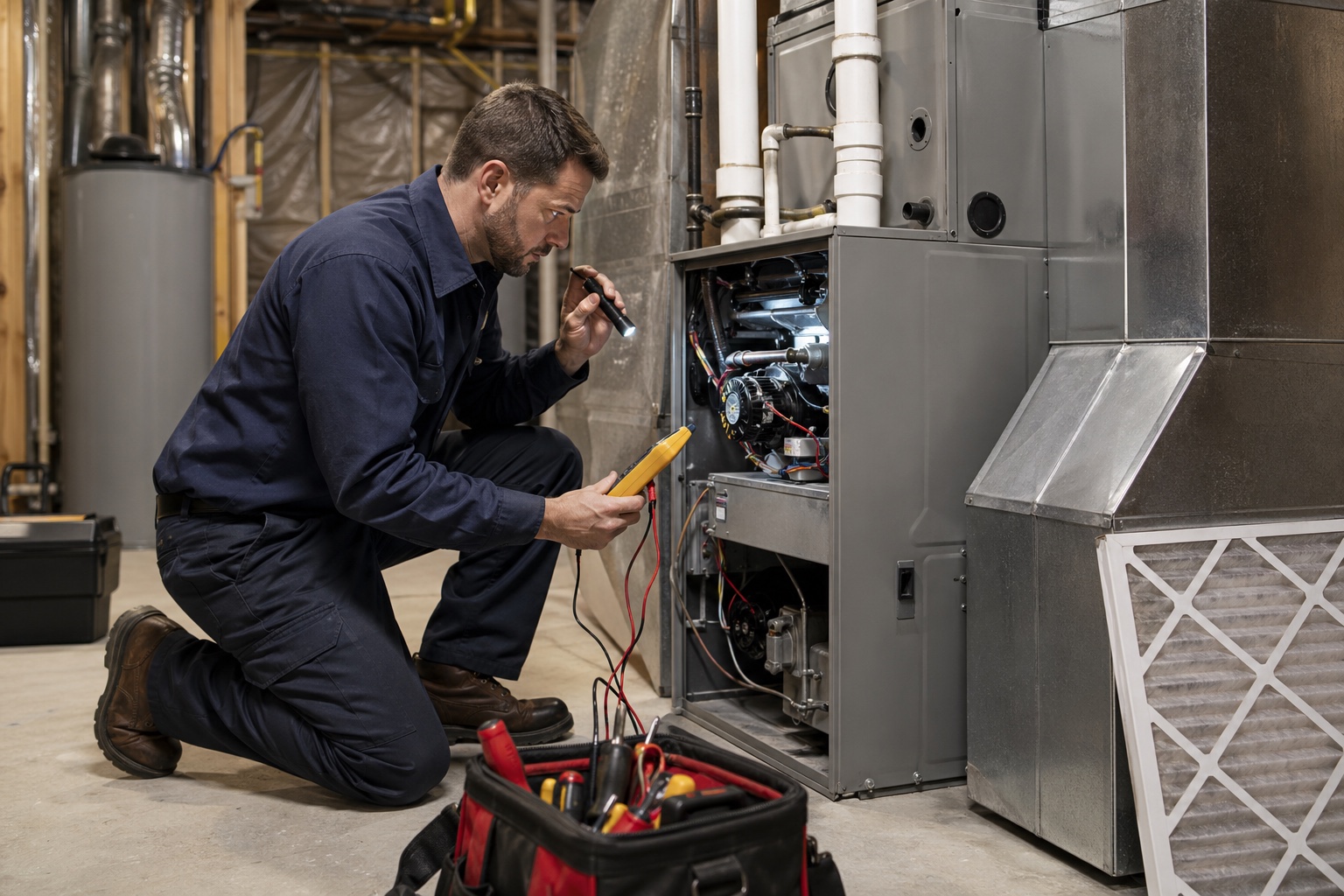
A carbon-monoxide alarm is the warning layer, not the maintenance plan. TSSA advises Ontario residents to have fuel-burning appliances inspected annually through a TSSA-registered fuels contractor. Health Canada also advises keeping fuel-burning appliances maintained and checking exterior exhaust vents for snow, ice, and debris.
Furnace service should review operating and safety conditions appropriate to the equipment, including ignition, combustion, venting, condensate where applicable, and controls. A recent tune-up does not justify ignoring an alarm, and a quiet alarm does not prove every appliance is operating correctly.
Rentals, condos, and multi-unit buildings need building-specific review
The updated rules also address multi-unit residential buildings and care occupancies, but responsibilities and placement can depend on suites, service rooms, garages, shared assemblies, and building systems. Owners, landlords, condominium managers, and residents should use the current Fire Code and the TSSA guidance written for their building type.
Residents should not assume a hallway device outside the unit satisfies every in-suite requirement. Property managers should document alarm locations, model and certification information, testing, replacement dates, resident notices, and responsibility for access and maintenance.
A practical five-minute home check
Walk from the basement to the top floor and confirm there is required coverage on each storey and adjacent to every sleeping area. Check for a certification mark, test button response, end-of-life date, intact power source, and an unobstructed location consistent with the instructions.
Then check that furnace, fireplace, dryer, water-heater, and other exterior vents are not blocked and that fuel-burning equipment has an appropriate maintenance plan. This guide summarizes current public guidance and is not a substitute for the Fire Code, manufacturer instructions, fire-department direction, or professional inspection.
Sources and methodology
This guide was reviewed against the linked official material. It is general planning information, not a substitute for an on-site diagnosis, manufacturer instructions, emergency response, or a written quote.
- TSSA — Changes to Ontario Fire Code: new requirements for CO alarms
January 1, 2026 requirements for existing homes, placement, and affected building conditions.
- Ontario — Fire Code, O. Reg. 213/07
Current legal text governing carbon-monoxide alarm requirements and referenced standards.
- Health Canada — Carbon monoxide: preventing exposure
Emergency response, certified alarms, vent clearance, and appliance-maintenance guidance.
Related Toronto HVAC guides
A Burning Smell From the Furnace: What to Do First
A brief dusty smell at seasonal startup is different from melting plastic, smoke, a gas odour, or a carbon-monoxide alarm. Treat the warning sign before trying to name the failed part.
HVAC Emergency: What to Do Before the Technician Arrives
When heating or cooling fails, the first 15 minutes matter. Here is what to check yourself and what to have ready when you call.
HVAC Maintenance Schedule for Ontario Homes
Staying ahead of furnace and AC problems starts with a simple seasonal schedule that most Ontario homeowners can follow.